



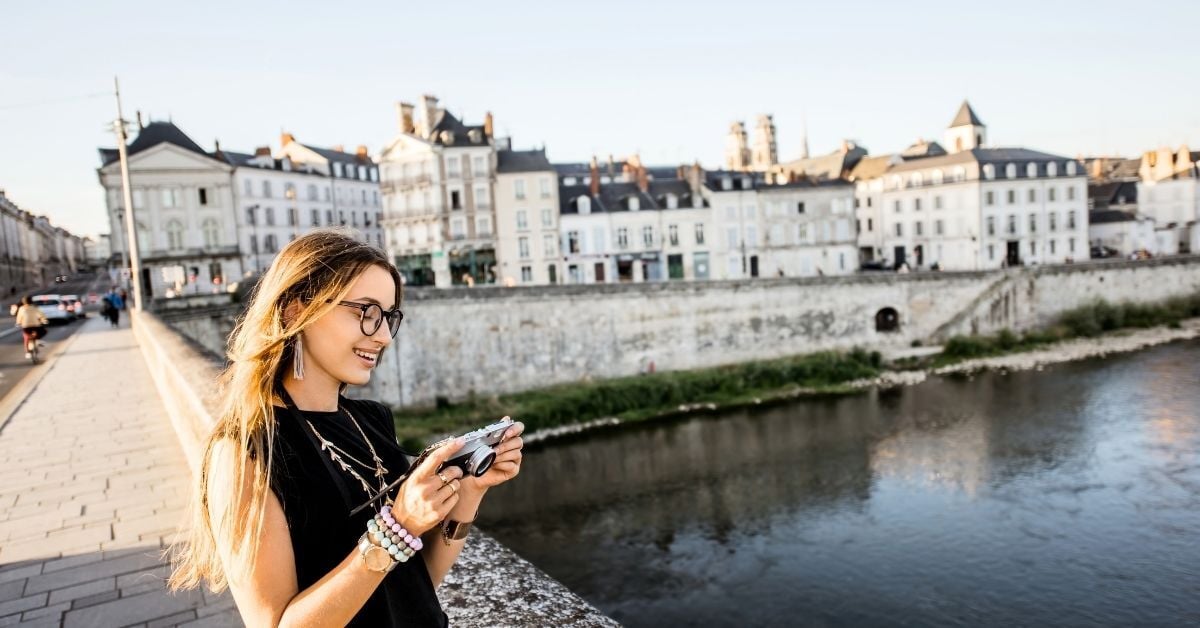
If you've ever daydreamed about sipping coffee with a pain au chocolat in a cozy Parisian cafe, people-watching along the Seine, or strolling through the city's streets as if you've stepped into the film Before Sunset, then you’ve probably thought of learning French at some point.
Whether you're asking for directions in the South of France, ordering a croissant in Montréal, or chatting with locals during your study abroad adventure, knowing a few common French words can make your trip much easier—and a lot more enjoyable.
The best part? You don't need years of language lessons to enjoy a French-speaking destination with more confidence. Learning a few basic French words for travel can help you read signs, order food, navigate public transportation, and make everyday interactions feel less intimidating.
30 Basic French Words You'll Learn Easily
Many essential French words are surprisingly easy to remember, especially when you hear and use them regularly. Start with individual words before moving on to full sentences (we’ll get to that next!). Once you’re familiar with these everyday terms, learning longer expressions becomes much more natural.
Whether you're traveling for a vacation, preparing to study abroad, or simply exploring a new language, these common French words are a great place to begin.
1. Bonjour
Meaning: Hello; Good morning; Good afternoon; Good day
Pronunciation: bon-zhoor
Where it's usually used: Even if you don’t speak French, you’ve definitely encountered "bonjour" somewhere, as this is one of the most common and important French words. This is the first word you'll hear almost everywhere in French-speaking places. Say it when entering a cafe, hotel, classroom, shop, or meeting someone for the first time during the day.
2. Salut
Meaning: Hi
Pronunciation: sah-loo
Where it's usually used: A casual greeting used with friends, classmates, or people your age. It can also mean "bye" in informal situations.
3. Merci
Meaning: Thank you
Pronunciation: mehr-see
Where it's usually used: Use it whenever someone helps you, serves your food, gives directions, or opens the door. It's one of the most important French words you'll use every day.
4. Oui
Meaning: Yes
Pronunciation: wee
Where it's usually used: Whether you're answering a question, confirming an order, or agreeing with someone, this basic French term comes up constantly.
5. Non
Meaning: No
Pronunciation: nohn
Where it's usually used: Using this easy French word is helpful when politely declining something, answering questions, or saying you don't need assistance.
6. S'il vous plaît
Meaning: Please
Pronunciation: seel voo pleh
Where it's usually used: Although technically a phrase, many learners encounter it as a single expression. You'll use this important French phrase when ordering food, asking for help, or requesting directions.
7. Pardon
Meaning: Excuse me / Sorry
Pronunciation: par-don
Where it's usually used: Say it when trying to get past someone in a crowded train, accidentally bumping into someone, or asking them to repeat what they said.
8. Au revoir
Meaning: Goodbye
Pronunciation: oh ruh-vwah
Where it's usually used: The standard way to say goodbye when leaving a restaurant, store, hotel, or classroom.
9. Eau
Meaning: Water
Pronunciation: oh
Where it's usually used: You'll spot this basic French word on restaurant menus, grocery stores, and bottled water labels.
10. Café
Meaning: Coffee
Pronunciation: kah-fay
Where it's usually used: Perfect for ordering your morning drink or finding a café while exploring a new city.
11. Pain
Meaning: Bread
Pronunciation: pan
Where it's usually used: Seen in bakeries, breakfast menus, and supermarkets throughout French-speaking destinations.
12. Métro
Meaning: Subway
Pronunciation: meh-tro
Where it's usually used: One of the first basic French terms travelers recognize when using public transportation in cities like Montréal or Paris.
13. Gare
Meaning: Train station
Pronunciation: gar
Where it's usually used: Appears on transportation signs and maps. Knowing this essential French word helps when traveling between cities.
14. Hôtel
Meaning: Hotel
Pronunciation: oh-tel
Where it's usually used: Knowing this word is useful when checking in, asking for directions, or reading city maps.
15. Argent
Meaning: Money
Pronunciation: ar-zhan
Where it's usually used: Helpful when shopping, paying bills, or talking about prices.
16. Prix
Meaning: Price
Pronunciation: pree
Where it's usually used: You'll see this word on store signs, menus, and price tags while shopping.
17. Menu
Meaning: Menu
Pronunciation: meh-new
Where it's usually used: Luckily, this word looks similar in English. You'll find it in restaurants and cafes.
18. Entrée
Meaning: Starter or appetizer (in French)
Pronunciation: on-tray
Where it's usually used: You’ll often see this French word on menus. Keep in mind that in France, an entrée is the first course—not the main dish. Another meaning of this common French word is entrance.
19. Sortie
Meaning: Exit
Pronunciation: sor-tee
Where it's usually used: Look for this word in airports, shopping malls, train stations, and museums.
20. Enchanté
Meaning: Delighted / Pleased to meet you / Enchanted
Pronunciation: an-shan-tey
Where it's usually used: This French term is usually used when you are pleased to meet someone. You tell this to the person who is being introduced to you.
21. Rue
Meaning: Street
Pronunciation: roo
Where it's usually used: You'll see this word in street names and addresses while navigating cities.
22. Ville
Meaning: City
Pronunciation: veel
Where it's usually used: Maps, tourist brochures, transportation signs, and travel guides frequently use this word.
23. Musée
Meaning: Museum
Pronunciation: mew-zay
Where it's usually used: This word is perfect for travelers planning to visit cultural attractions.
24. Université
Meaning: University
Pronunciation: oo-nee-ver-see-tay
Where it's usually used: Especially useful for international students looking for campuses or student services.
25. Étudiant
Meaning: Student
Pronunciation: ay-too-dyahn
Where it's usually used: Helpful if you're studying abroad or applying for student discounts.
26. Professeur
Meaning: Teacher
Pronunciation: pro-feh-suhr
Where it's usually used: This French word is easy to remember as it’s close to its English meaning. Knowing this word will be useful especially if you’re planning to study in French-speaking countries.
27. Livre
Meaning: Book
Pronunciation: leevruh
Where it's usually used: Useful when shopping at bookstores or borrowing materials from libraries.
28. Temps
Meaning: Time / Weather
Pronunciation: tahm
Where it's usually used: Depending on the conversation, it can refer to the weather or the time.
29. Jour
Meaning: Day
Pronunciation: zhoor
Where it's usually used: You'll hear it in schedules, itineraries, and conversations about dates.
30. Nuit
Meaning: Night
Pronunciation: nwee
Where it's usually used: Common in hotel bookings, travel schedules, and conversations about evening plans.
The Best Way to Start Speaking French
The saying practice makes perfect couldn’t be more true here because the easiest way to remember French words is to use them every day. Read signs, label items around your room, listen to French music, and practice with native speakers whenever you can. Learning a few new words consistently is much more effective than trying to memorize long vocabulary lists all at once.
Learn the French Language with ILSC Language Schools
If you're ready to move beyond basic French words for travel, ILSC Language Schools offers interactive French programs in Montréal, where you can learn while living in one of Canada's largest French-speaking cities. ILSC Language Schools New Delhi also offers French language courses for students in India. You can also learn French online through ILSC ALLO where you can build your French skills from anywhere in the world through flexible online classes designed for different learning levels.
Frequently Asked Questions About Common French Words
Is the French language hard to learn?
Not necessarily. French becomes much easier when you start with everyday vocabulary instead of complex grammar. Learning common French words first helps you recognize patterns and build confidence before moving on to conversations.
How to remember French words easily?
Don’t overwork yourself, you can start with simple French words for beginners. Practice a few words every day instead of memorizing long lists. Flashcards, language apps, podcasts, movies, and using the words in real conversations all help improve retention. Repetition is one of the most effective ways to expand your vocabulary.
What are the first French words beginners should learn?
Start with greetings, polite expressions, numbers, food, transportation, and directions. These essential French words are the ones you'll use most often while traveling, studying abroad, or having simple conversations with native speakers.
Where can I study French?
You can study French through language schools, universities, online courses, or immersion programs. If you're looking for an international learning experience, ILSC Language Schools offers French programs in Canada and India, as well as online learning through ILSC ALLO, making it easier to study wherever you are.